July 4 2026
Hello, everyone.
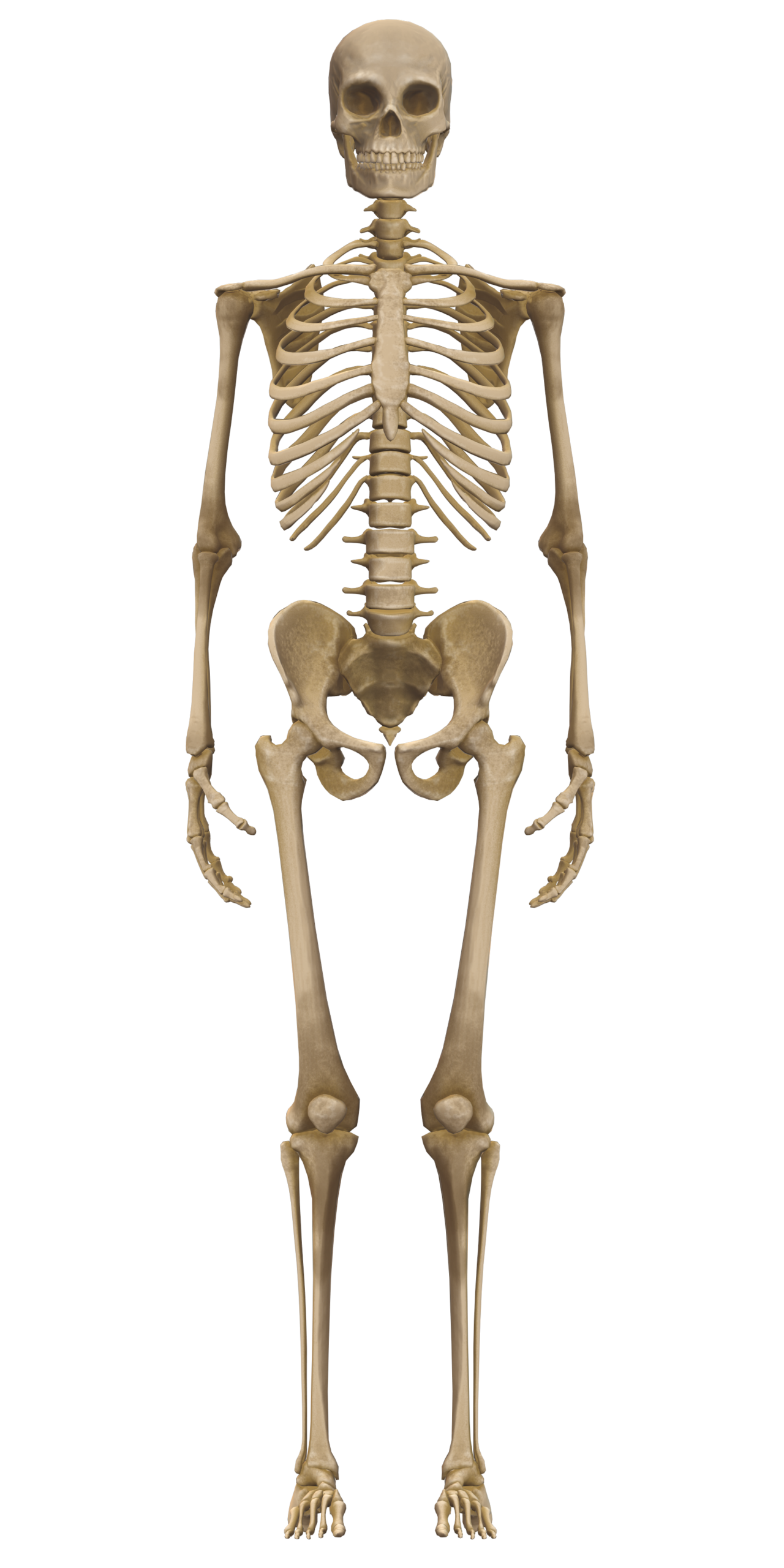
Look at this Standing Skeleton—the Frame of Our Body. It stands on the small feet, especially on the anklebones. On them the entire structure stands tall with the legs, hips, spine, and head on top of each other, and the ribcage & arms attached to the spine. The feet carry them all around, one foot at a time.
I have been analyzing foot structure & its mechanics for its weight-bearing function since 2003.
Human foot is amazingly engineered with so many small bones and so many tiny joints.
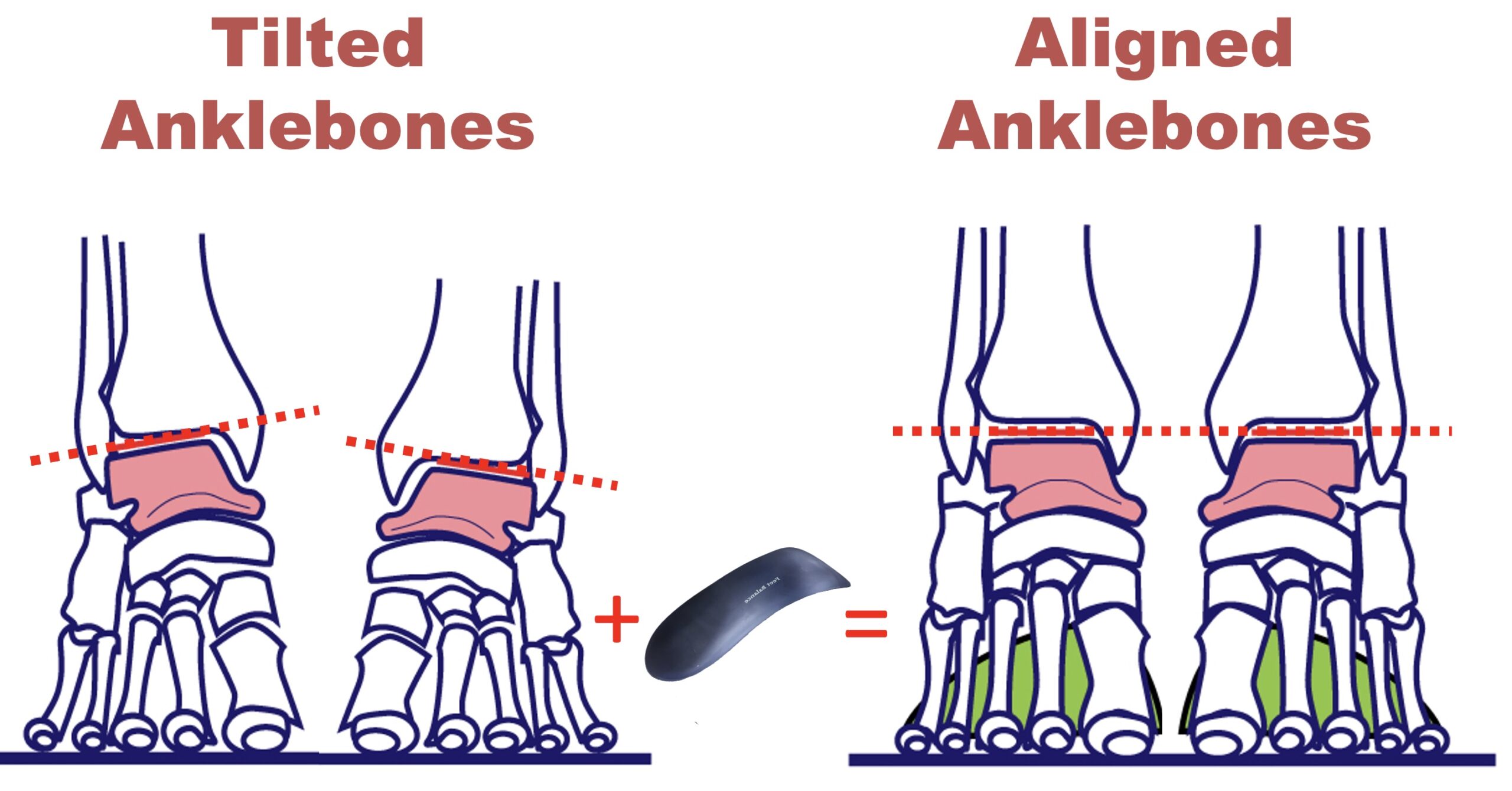
The alignment of these joints is important for our physical balance and the health of our feet & weight-bearing joints.
Don’t you want to find out if your foot bones are all properly aligned or not—especially, the Anklebones?
In this blog, we’ll explore why the anklebones should be aligned first for the overall body health.
July 7, 2026
Have you ever wondered how our foot is built to support our entire body weight—which for most adults is well over 100 pounds—also all the stuffs we carry on our body?
Think about soldiers and firefighters. An average firefighter or soldier may weigh around 200 pounds and carry an additional 60 to 80 pounds of equipment. And they don’t just walk—they run, jump, climb, and sometimes even carry a wounded colleague. Every time their foot strikes the ground, the ground reaction force multiplies the load (when walking 1.5 times, when running the impact from ground reaction force can become 4-5 times) creating impacts that can range from several hundred to well over a thousand pounds on our foot.
It is remarkable that our relatively small foot is designed to absorb and transmit these enormous forces efficiently each step we make all day.
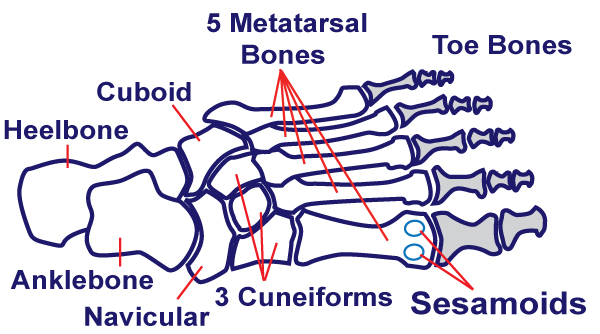
Our foot consists of 28 bones, including the 2 sesamoids under the first metatarsal head, and it can be divided by 2 parts: the arch and the toes. Each part shares the same number of bones: 14 bones form the arch and 14 bones form the 5 toes. And the actual foundation of our body is the arch part since the body weight falls on the arch, not on the toes.
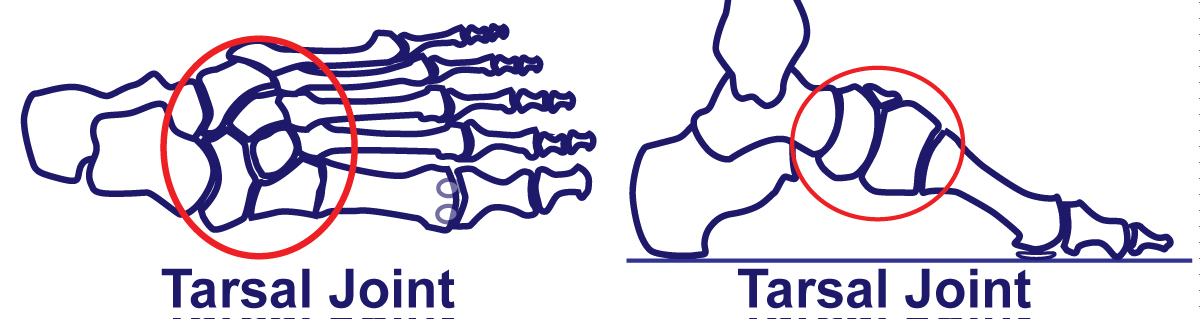
The group of tiny joints on top of the foot that forms the arch is collectively called “Tarsal Joint.” This Tarsal joint is made with 12 bones (5 tarsal bones and 5 metatarsal bones), and they are arranged as 3D puzzle, so makes the most complicated joint in our body. Its complexity makes it hard to count those joints. When I carefully counted, I found 21 joints in the Tarsal joint. and this tarsal joint has very tiny 1-2mm of up and down range of motion, which is makes sense since the foundation should not fluctuate. But that tiny up-and-down range of motion works as a shock absorber.
Our entire body weight passes through the Tarsal joint, the arch, with each step we make.
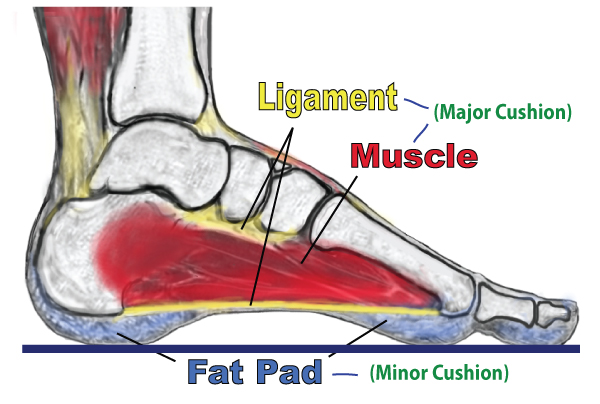
This tarsal joint, or the arch part, is connected with countless ligaments, most of them are connecting beneath the tarsal joint in so many layers, and most foot muscles fill under the arch, and they supposed to work as a cushion to handle the weight. And the plantar fascia ligament with lots of connective tissues attached to the heel bone and the ball of the foot area providing additional cushion to the arch part for the weight-bearing. Under the heel and the ball of the foot have only thick skin with some fat pads that works as a cushion, and this cushion material is much less effective than the multiple layers of the ligaments, and thick muscles under the arch area.
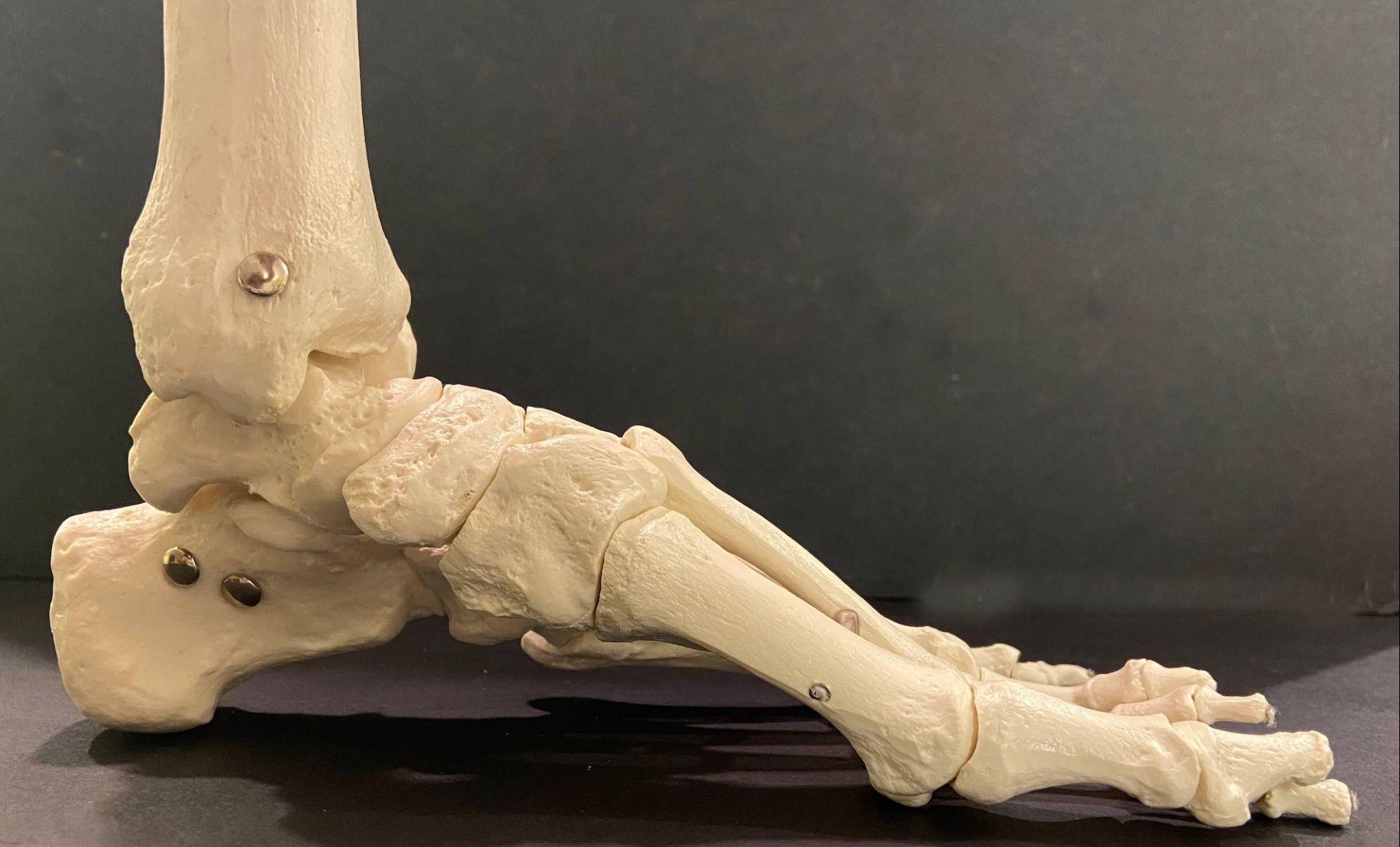
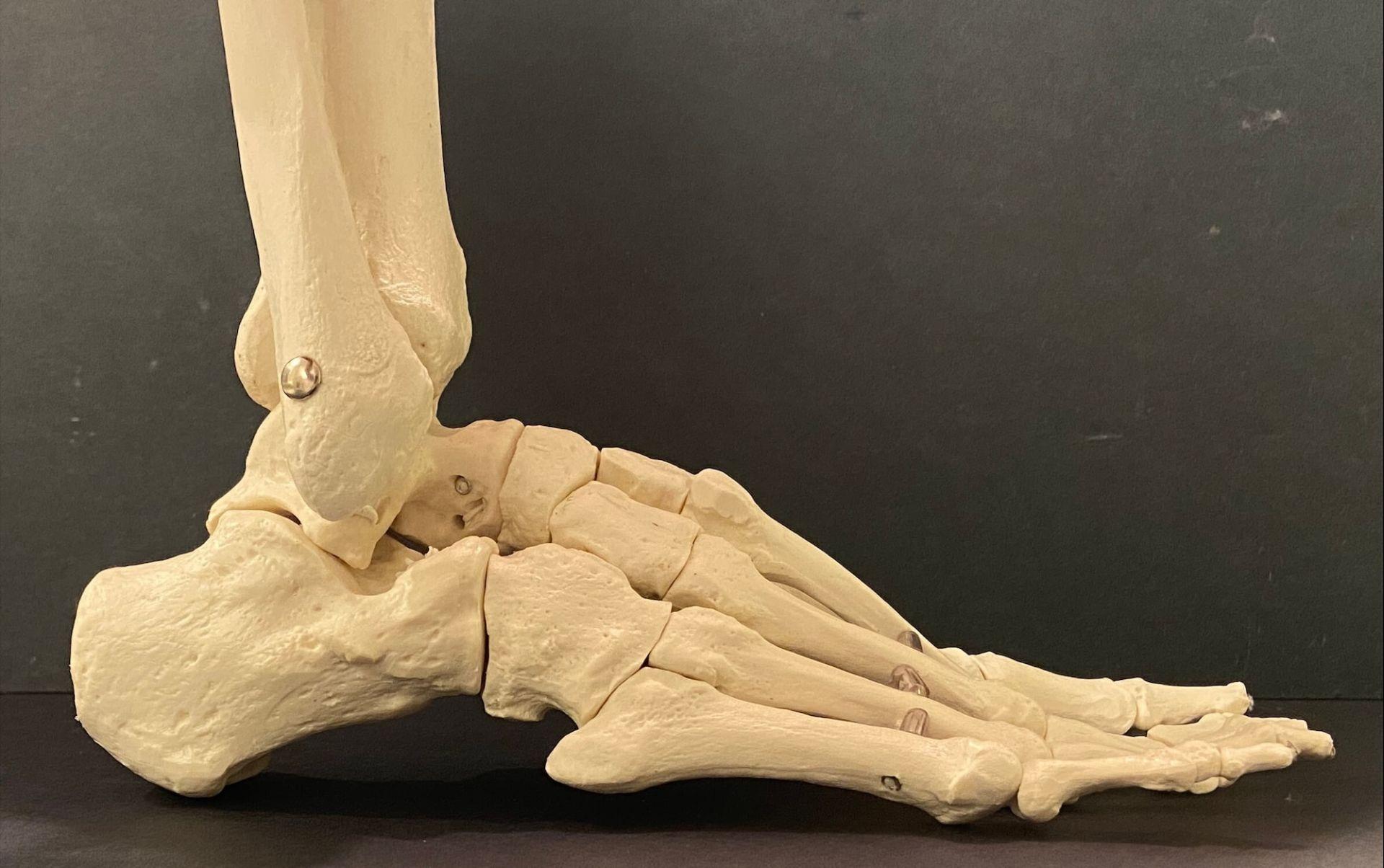
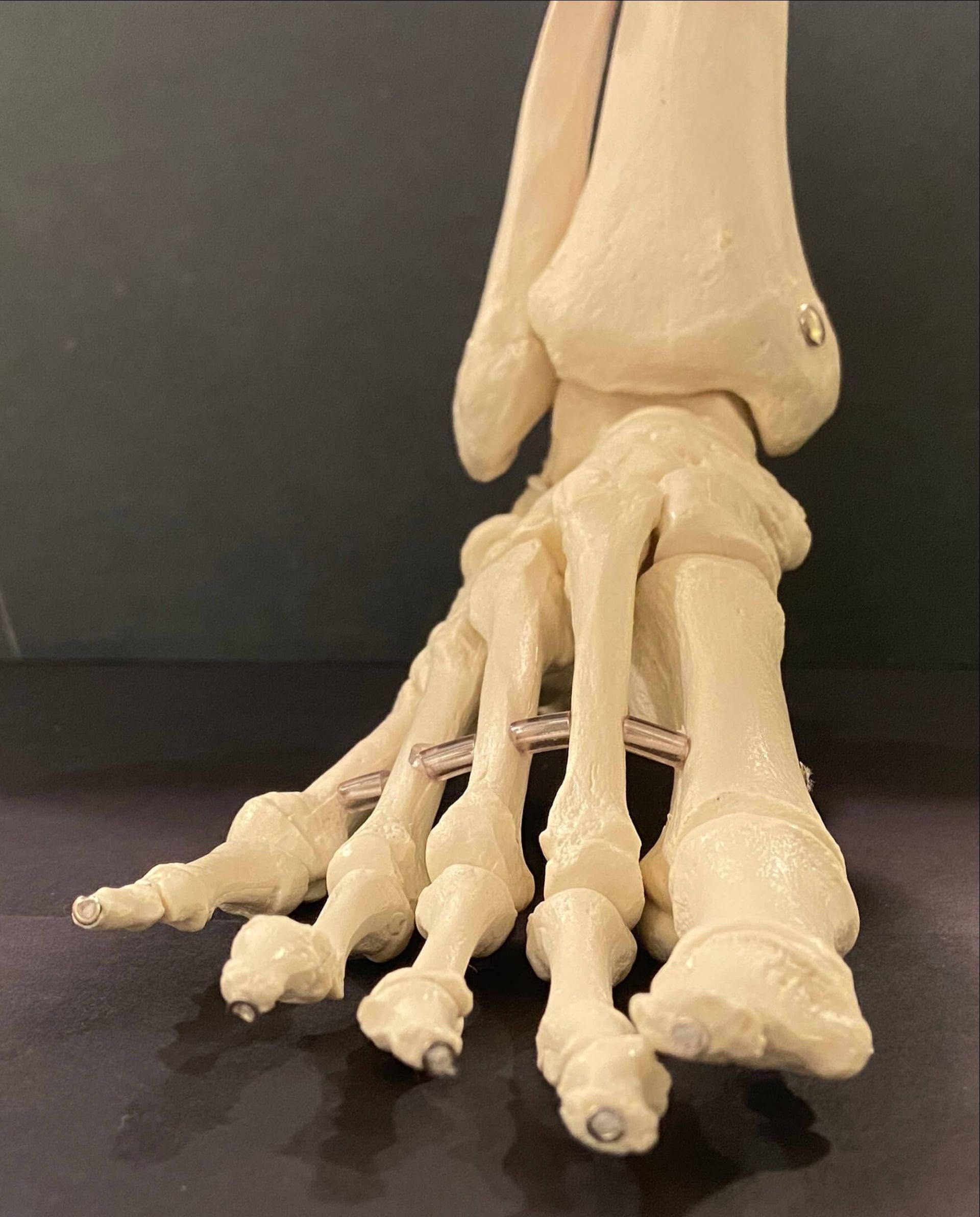
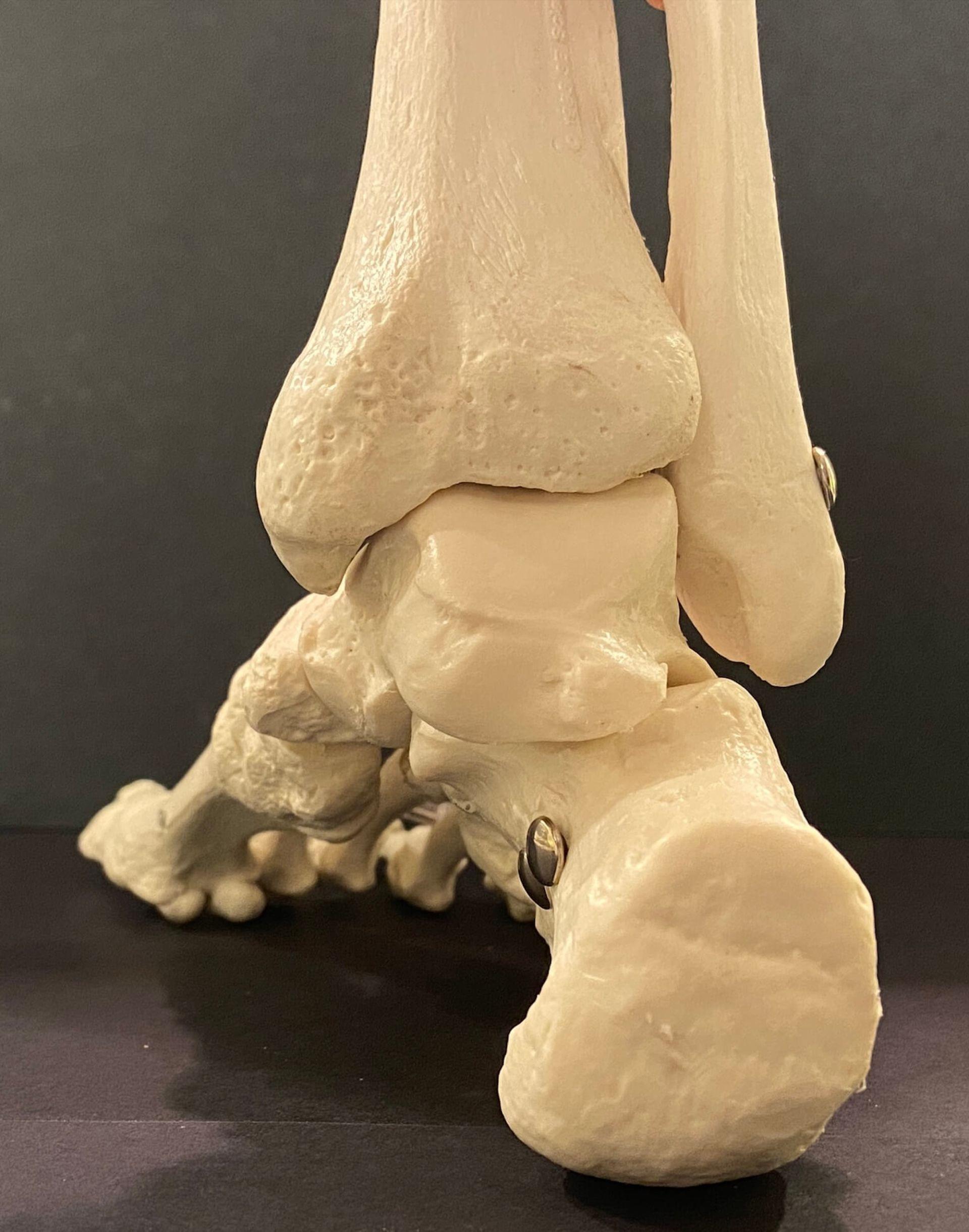
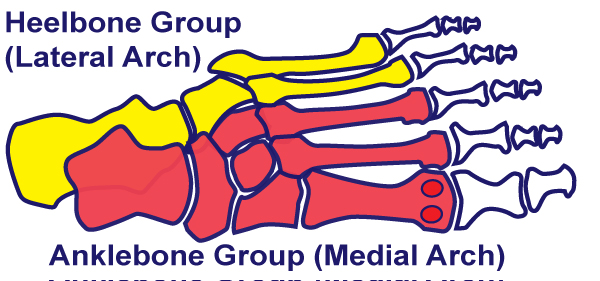
Also, it’s important to understand that the arch part can be divided into high medial arch (big toe side) and the low lateral arch (pinky toe side) as the 5th illustration shows. The medial arch is formed with 8 bones: the anklebone and the other 7 bones in front of it. The low lateral arch is formed with 4 bones: the heel bone and the other 3 bones in front of it. So, the high medial arch is designed with much bigger bones with twice the number of bones.
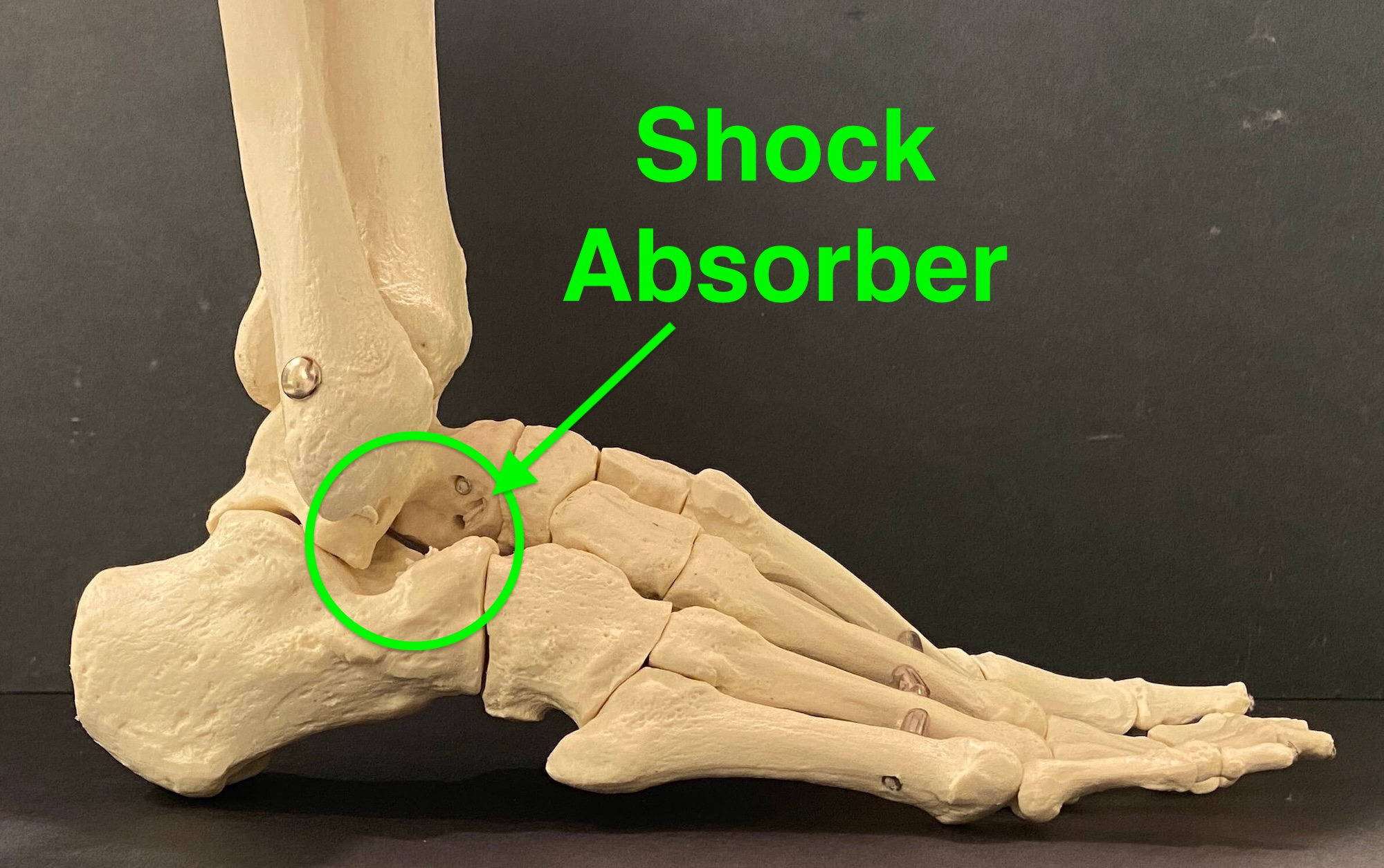
Look at the 6th image with a green circle—a hole, or a space, between the necks of the anklebone and heelbone at the lateral side of the foot—basically, between the high medial arch and the low lateral arch—that allows the heel bone and the cuboid can move into when walking uneven terrain. A genius engineer that allow the foot can handle all different terrains of uneven ground w/out knocking the foot bones.
So, the medial arch is designed with much bigger bones with twice the number of bones than the lateral arch.
And from the top 2 foot photos, take a careful look at how the bottom shape of the heel bone is different at the medial side and the lateral side. The medial side has a flat bottom, the lateral side has a pointy bottom. So the body weight should fall on the medial side for the foot can handle the body weight more comfortably.
Now, the allocation of the soft tissues of the foot that can function as cushions, like muscles and ligament, connective tissues, are mostly fill in the arch area—especially under the high medial arch. and the foot muscles are 5 times thicker in the high medial arch than the low lateral arch. So as the leg bone stands on the anklebone, the body weight falls on the high medial arch.
And the size on top of the anklebone where the leg bone stands with all the body weight is about 1 square inch. Imagine, on that small top of the anklebone stands our entire body tall with hundreds of pounds. That is why the anklebones should be aligned with 0.3mm accuracy.
How to align the anklebone with that accuracy and how can we tell if the alignment is done with that accuracy?
We’ll find out…

July 9, 2026
In order to align the anklebones, we need to first find orthotics that aligning the anklebones at the same height with 0.3 mm accuracy, which most people cannot tell by just looking at them. However, we can find out with Anklebone Alignment Test that detects as small as o.3 mm tilt.
And we need use the orthotics with shoes with level bottoms. AA test can also find out whether the shoe bottoms are leveled or not.